Quick Navigation
The 8 Best Binoculars for Birdwatching
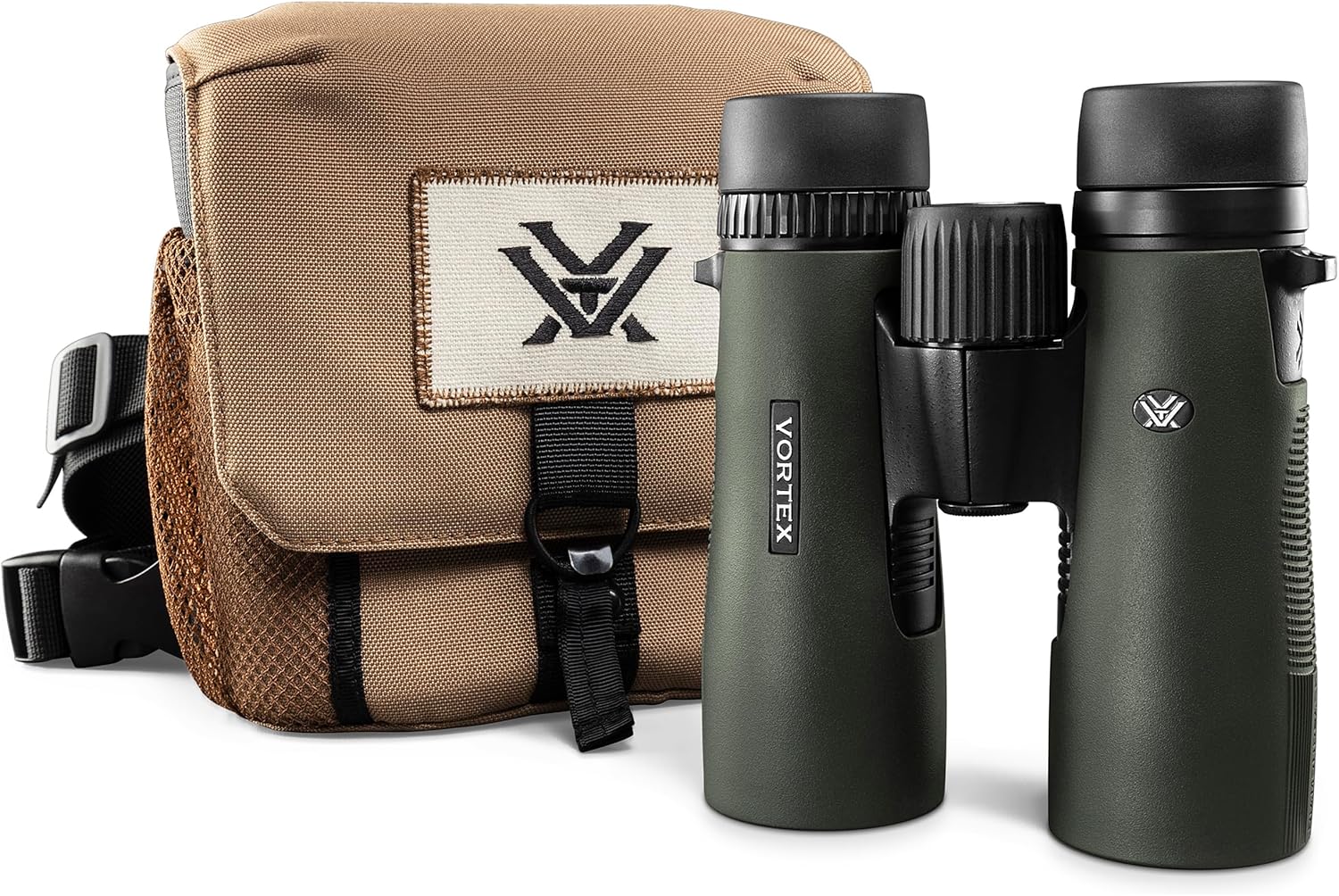
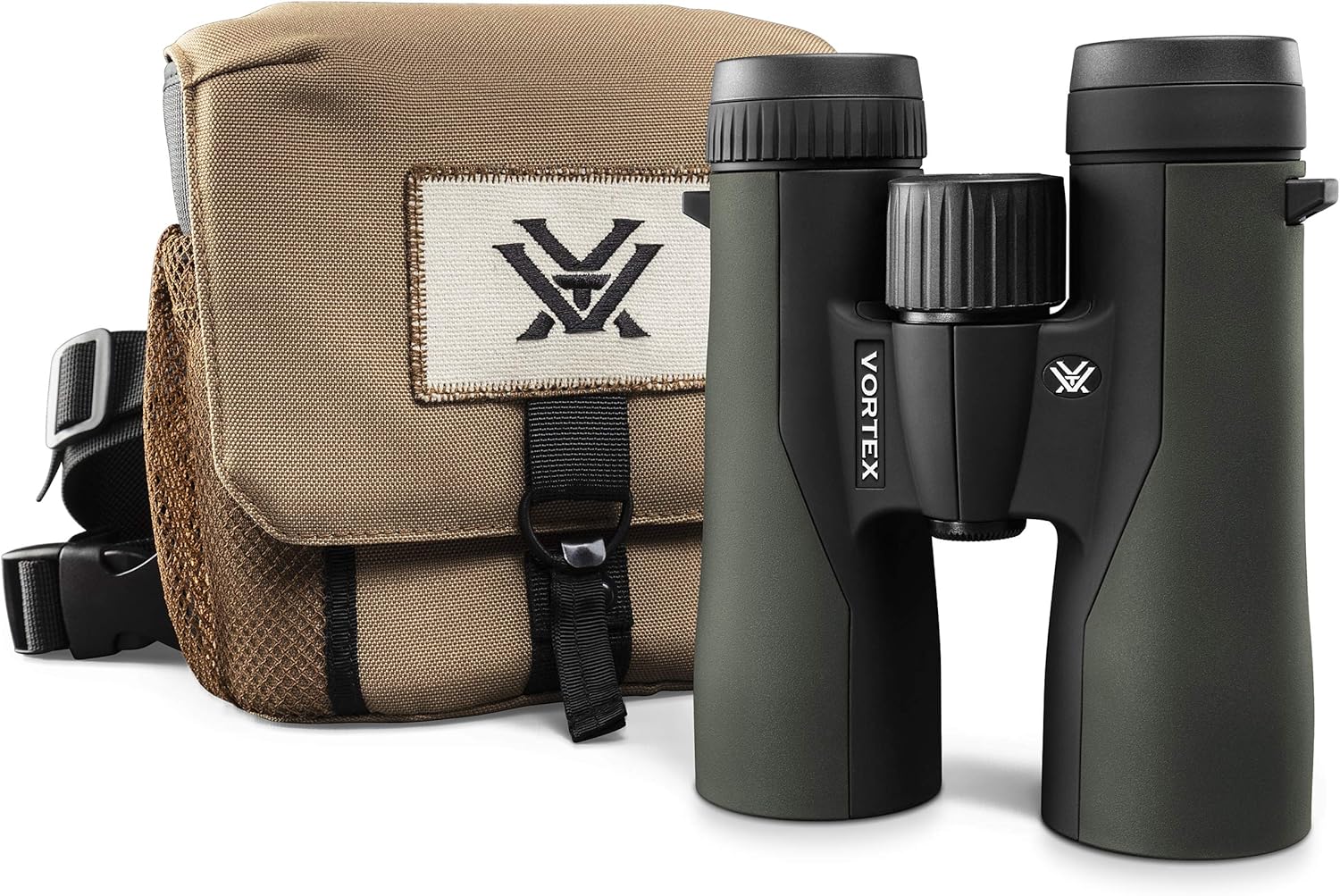
The Diamondback HD earns the top spot for the same reason it dominates birding forums: at around $200 it gives you argon-purged housing, a fully multi-coated optical path, and Vortex's unconditional lifetime warranty — no receipt, no questions. Argon is a heavier gas than nitrogen and maintains its seal more reliably at temperature extremes, which matters on a cold January morning more than any spec number. The 10x magnification is the right call for most North American birding. Coastlines, prairie, and open preserves reward extra reach; if you bird primarily in dense Northeast woodland, the 8x42 variant of the same line is worth ordering instead. The focus wheel is slightly stiff out of the box and loosens after a few weeks of regular use — break it in before a trip.
8x42 vs 10x42? The 10x42 earns the top spot here for its versatility across open and mixed terrain. If you bird mostly woodland or are a beginner, the 8x42 is often the better choice. Read our full 8x42 vs 10x42 comparison →
- +Argon purging holds the seal better than nitrogen at cold temperature extremes
- +VIP warranty covers accidental damage, not just manufacturing defects — genuinely useful
- +Smooth diopter adjustment locks firmly once set
- +At 601g, light enough to carry on a neck strap for a full day without strain
- −No ED glass — you'll see some color fringing on backlit birds against a bright sky
- −Close focus of 6.5 ft is adequate but not a strength; not ideal for close-range butterflies or dragonflies
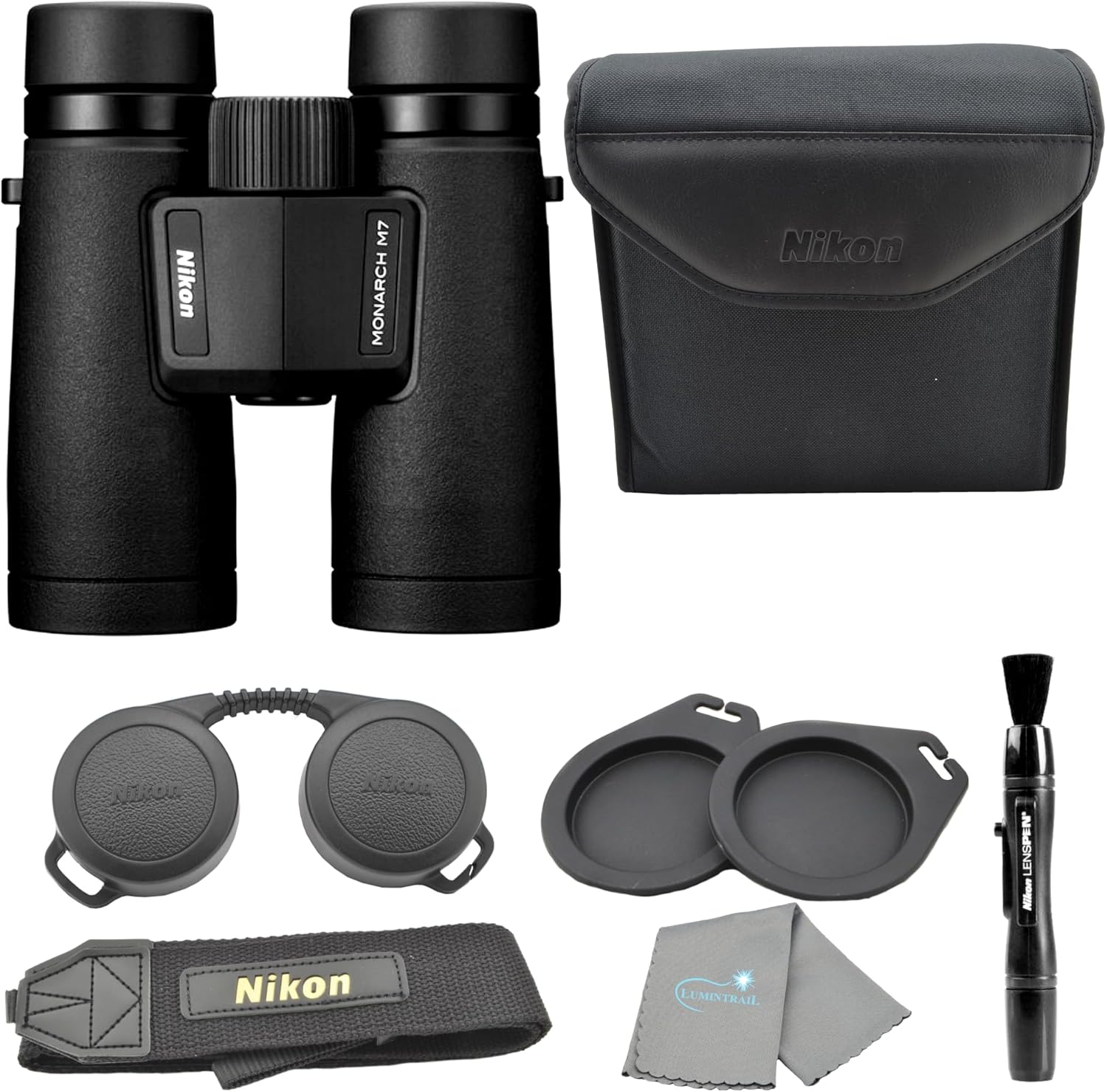
The Monarch M7 sits at the point where ED glass starts paying its way. Compared to the Diamondback HD, you'll notice the difference in color accuracy on birds with complex plumage — the rust tones on a Hermit Thrush, the iridescence on a Brewer's Blackbird — particularly in mixed or overhead lighting. The locking diopter is, oddly, the feature most buyers overlook: once you've set your individual eye correction, it stays there. No accidental nudges in the field. The 33° wide field of view (wider than the Diamondback) makes locating birds in foliage noticeably easier. It costs nearly double the Diamondback; whether that gap is worth it depends on how often you bird and how much plumage detail matters to your sessions.
- +ED glass eliminates most chromatic aberration — color accuracy is a genuine step up
- +Locking diopter stays set through accidental contact with clothing and cases
- +Wider FOV than most 10x42s at this price — 330 ft / 1,000 yds
- +Oil and water repellent coating on both eyepiece and objective lenses
- −Close focus (8.2 ft) is longer than average — not the right choice if macro identification matters
- −At $380+, the price gap over the Diamondback requires regular use to justify
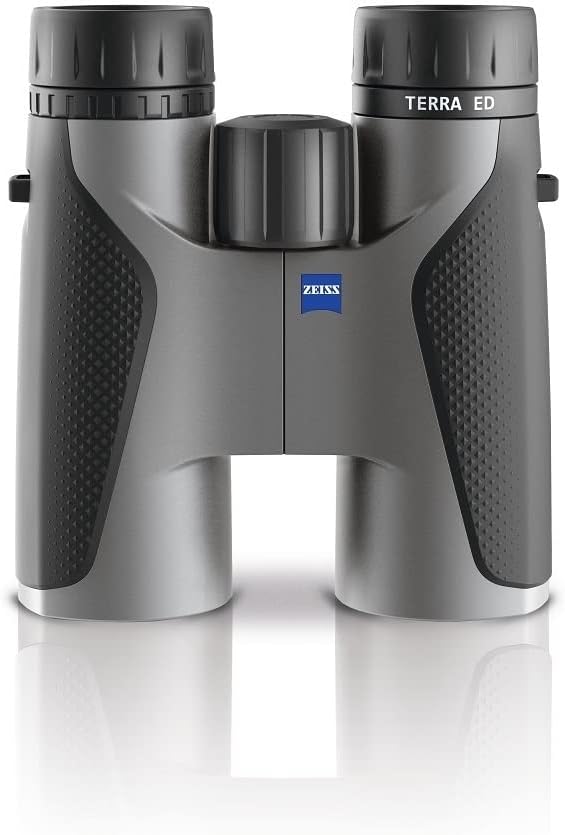
If you bird primarily in forest and woodland — and especially if you chase warblers in migration — the Terra ED deserves serious consideration. It pairs SCHOTT ED glass with a genuinely wide 393-foot field of view and one of the closest minimum focus distances in the mid-range class (5.5 ft). That close-focus spec is more than a gimmick: Ruby-crowned Kinglets and Brown Creepers often work within 10 feet of you. Get a binocular that can see them. An 8x is inherently steadier handheld than a 10x, the larger 5.25mm exit pupil is meaningfully brighter at dawn and dusk, and the ZEISS T* coating gives the image a contrast and punch that competes with binoculars priced $200 higher. The 10-year warranty is shorter than Vortex's lifetime coverage — a fair tradeoff for a noticeably better optical experience. Note: the Terra ED 8x42 also comes in a 10x42 config if you want SCHOTT glass at slightly longer reach.
- +SCHOTT ED glass at a sub-$650 price — exceptional color fidelity and contrast
- +5.5 ft close focus opens up butterfly, dragonfly, and wildflower identification
- +Wide 393-foot FOV makes finding birds in dense foliage dramatically faster
- +LotuTec hydrophobic coating keeps rain beads off instead of smearing
- −8x magnification is underpowered for shorebird flats or hawk watches at long range
- −Shorter warranty (10-year) than US brands; ZEISS service is reliable but not unconditional
The Viper HD is Vortex's step above the Diamondback: same argon purge and lifetime warranty, now with ED glass and XR anti-reflective coatings on every lens surface. At 536g it's also lighter than almost anything else in its class — a difference you'll genuinely feel after four hours in the field. The 5.0 ft close focus is the standout spec: better than the Nikon Monarch M7 and most competing 10x42s at this price. Phase-corrected, dielectric-coated roof prisms give the image a brightness and sharpness that's a real step over the Diamondback when you're looking at both side by side on a foggy morning. If you're buying binoculars for 10–15 years of serious use, the Viper HD makes more sense than the Diamondback at the $250 difference it sometimes trades for. If you bird casually, save the money.
- +ED glass + XR multi-coating combination — noticeably better contrast than entry-tier binoculars
- +Lightest quality 10x42 under $500 — 536g significantly reduces neck fatigue
- +5.0 ft close focus — among the shortest in the 10x42 class
- +Same unconditional lifetime warranty as the Diamondback
- −Field of view (315 ft / 1,000 yds) is narrower than some mid-range competitors
- −Price sits between two strong alternatives; less differentiated than it was before competitors improved
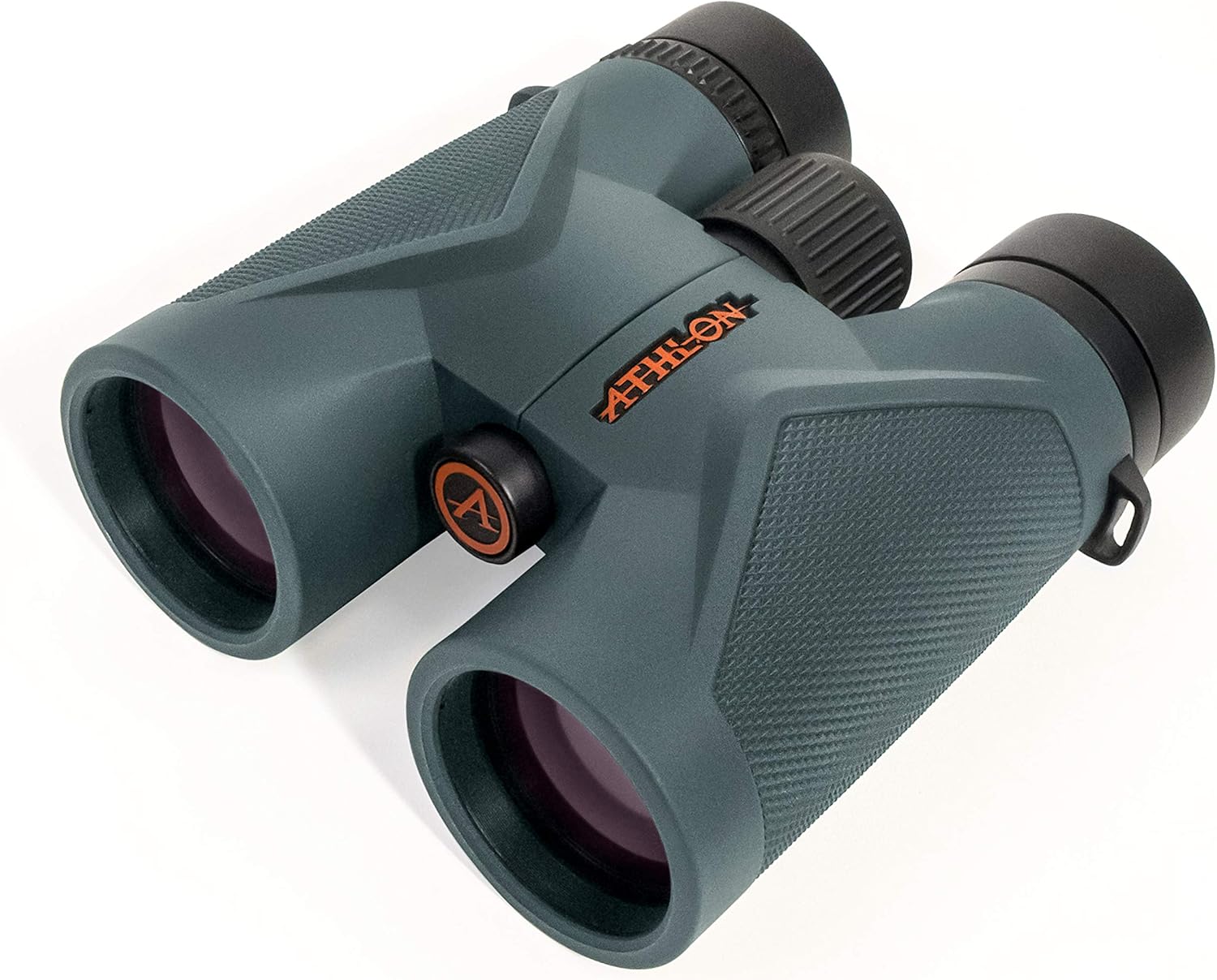
Athlon built its reputation by packaging ED glass and magnesium chassis construction into price points where competitors were still shipping polycarbonate bodies and standard glass. The Midas UHD delivers on that promise: the magnesium chassis keeps the weight honest for the size, the ESP dielectric coating gives genuinely accurate color rendition, and the 5.25mm exit pupil (large for 8x42) produces a noticeably bright image at dawn and dusk. The weak point is build finish — the focus wheel and diopter adjust feel slightly less precise than Vortex or Nikon at comparable pricing. This is an excellent choice if your budget is firm under $400 and you want ED glass without compromise.
- +ED glass under $375 — significant value differential vs. standard-glass competitors
- +Magnesium chassis — lighter and more rigid than polycarbonate at equivalent cost
- +Wide 388 ft / 1,000 yd FOV with 5.25mm exit pupil — a good combination for low-light and woodland use
- +Unconditional lifetime warranty — Athlon honors it reliably
- −Focus wheel and diopter feel slightly less refined than Vortex and Nikon at similar prices
- −Heavier than the Vortex Viper HD at 680g vs 536g — noticeable on a long day
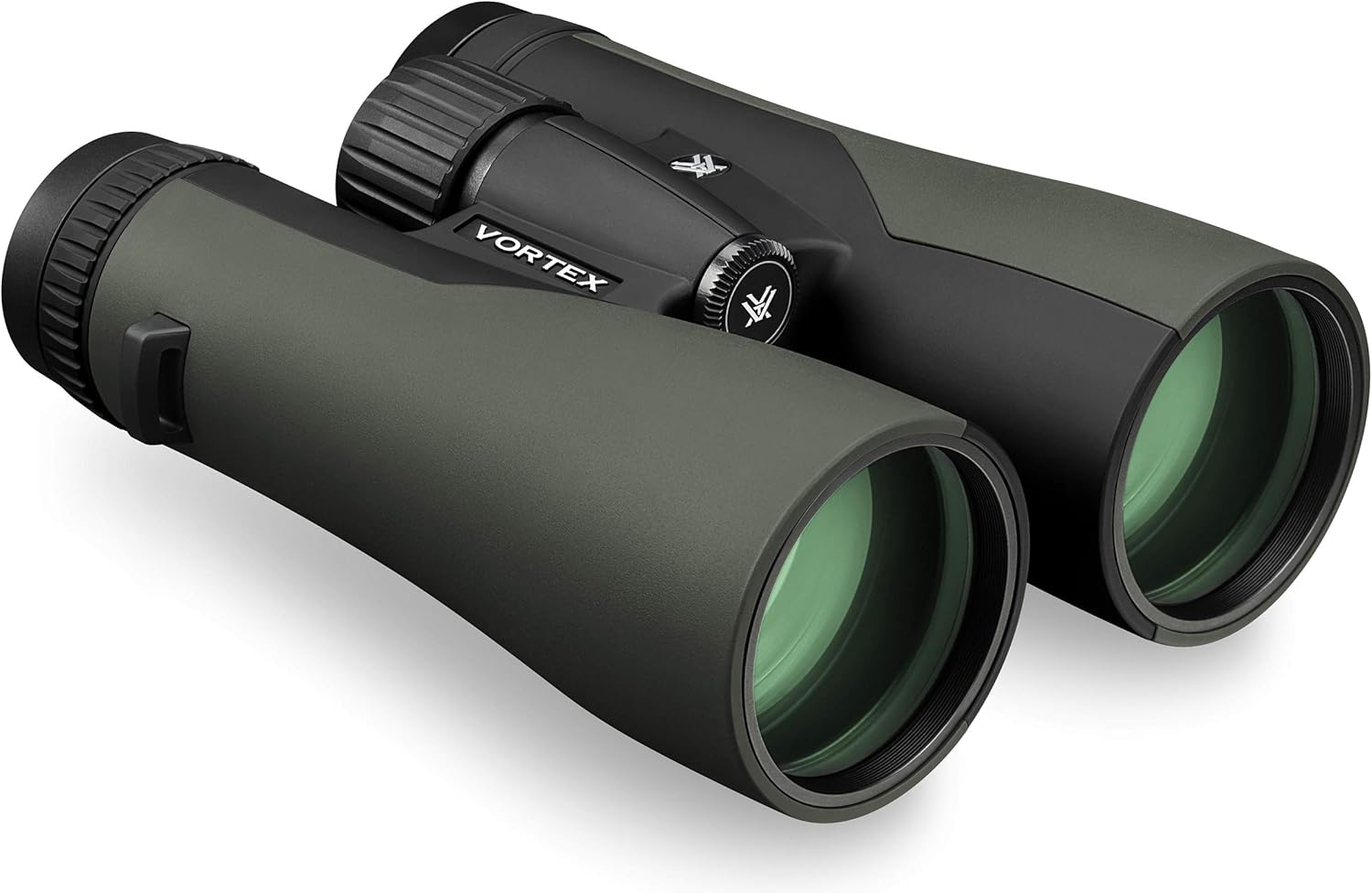
Be clear about what 12x50 means before buying: this is a stationary-use binocular. At 12x, any hand tremor is amplified to the point where many users find it uncomfortable to hold for more than a minute. The narrow field of view (267 ft / 1,000 yds) makes finding and tracking moving birds significantly harder than an 8x or 10x. What it is good for is a fixed-point vigil — sitting at a hawk watch platform, scanning a reservoir from a car window, or watching a distant shorebird mudflat. The 50mm objective lenses gather more light than a 42mm in the same magnification class. If that's your primary use case, this is excellent value at under $200 with Vortex's lifetime warranty.
- +12x magnification resolves fine plumage detail at distance where 10x falls short
- +50mm objective lenses provide good low-light brightness for the magnification level
- +Tripod-adaptable — a useful feature at 12x where hand tremor is nearly universal
- +Under $200 with unconditional lifetime warranty
- −12x is too much magnification for walking and finding birds — narrow FOV and hand shake make this frustrating on a trail
- −16.5 ft close focus is too long for most birds that land close to you
- −At 751g, noticeably heavy for extended handheld use
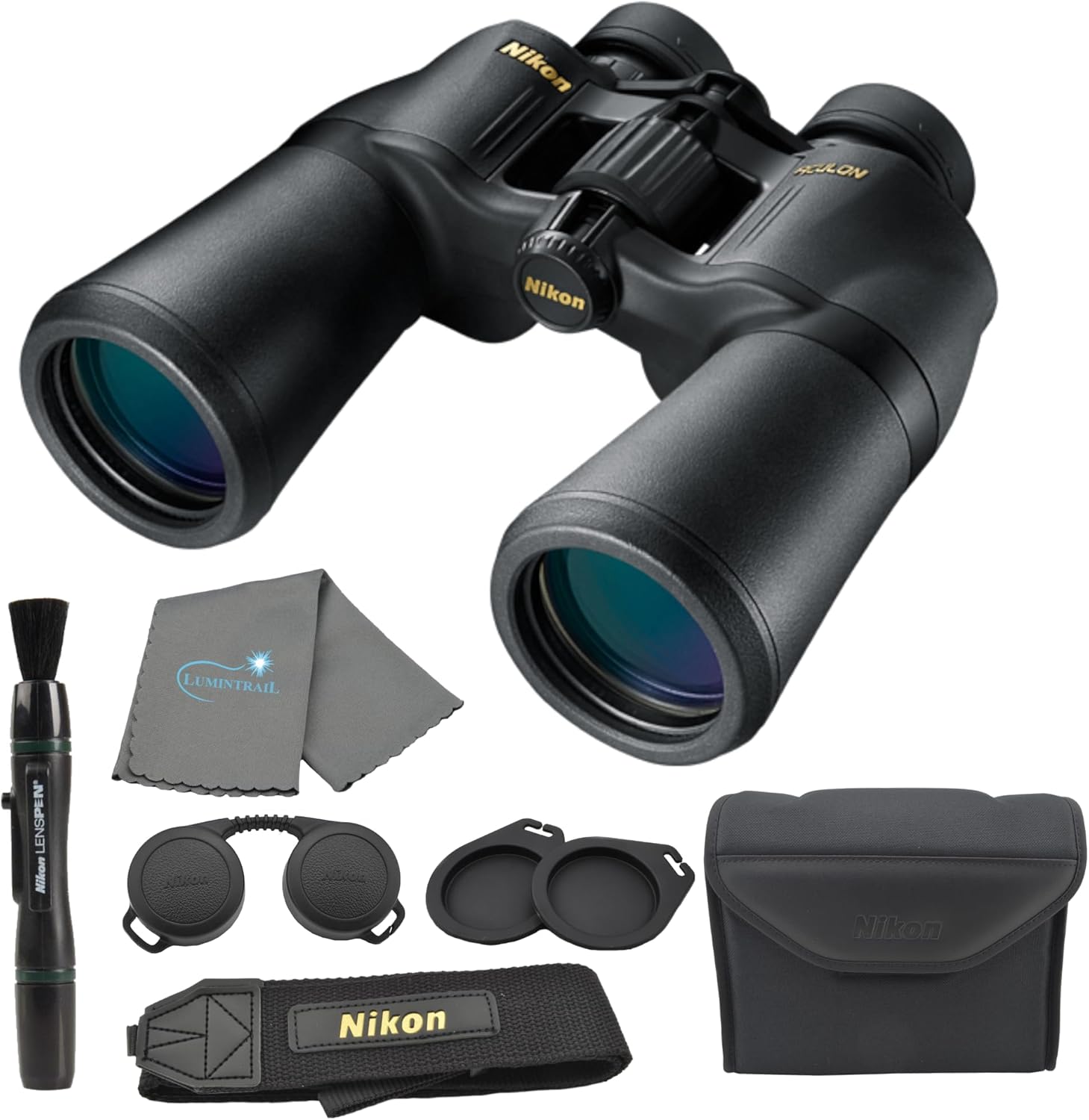
The Aculon exists to answer one question: what's the minimum you should spend to get a functional birding binocular? The answer is around $100, and this is what that looks like. Aspherical eco-glass provides reasonably flat-field images; the porro prism design gives a wider stereo base than roof-prisms at the same price, which some users prefer for depth perception. The major compromises are real: no waterproofing means a rain shower can be a problem, the 1-year warranty is weak, and at 799g it's the heaviest pick on this list. This is a starter binocular — genuinely fine for a beginner who wants to try birdwatching before committing, or as a set kept in the car or boat where a nicer pair shouldn't go.
- +Under $120 — logical entry point before committing to a quality binocular
- +Aspherical lens elements produce reasonable flat-field images at the price
- +Bundle includes carry case, neck strap, lens cloth, and lens pen — nothing extra to buy
- +50mm objective lenses give decent brightness in poor light for the price
- −Not waterproof — avoid in rain or coastal environments
- −1-year limited warranty — not covered if you drop it or expose it to weather
- −At 799g, significantly heavier than any other pick on this list — fatiguing after an hour
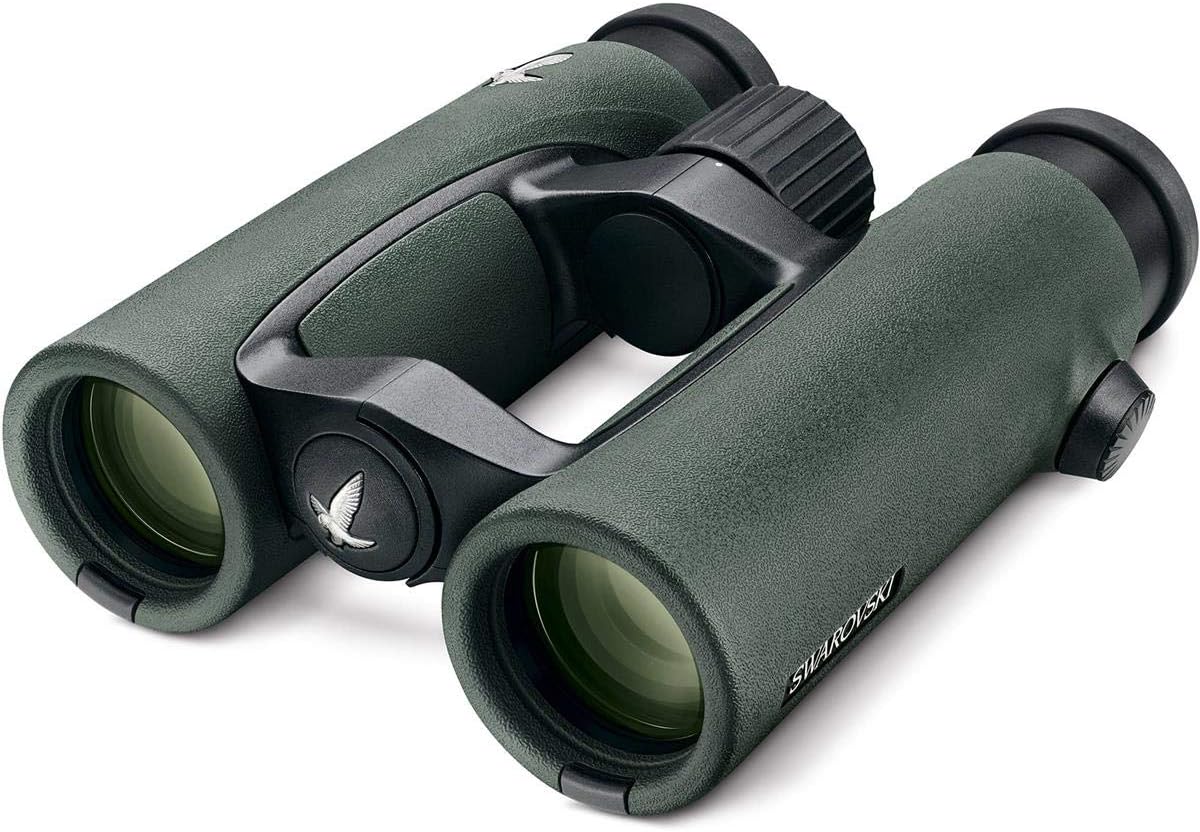
The EL is included because some people will buy it, and they should know what the money actually buys. Swarovski's fluoride glass and Swarovision coatings deliver approximately 91% light transmission across tested wavelengths — the highest measured in the premium class. What that means in the field: in the fifteen-minute window before sunrise and after sunset when the birds are most active, the EL is pulling images that the $500 binocular cannot produce. The 20mm eye relief is the longest in premium binoculars — if you wear glasses, this is the category where that gap becomes practically significant. The Swarovski's ergonomics — the wrap-around grip, the perfectly weighted center balance — are something you feel immediately and don't forget. Whether that is worth $2,500 more than the Vortex Viper HD is a calculation only you can make. Many birders who bird 150+ days a year conclude that it is.
- +91% light transmission — measurably better than competitors at dawn and dusk
- +20mm eye relief — most comfortable binocular for longtime glasses wearers in the market
- +Swarovski's build and optical tolerances are consistent across units — QC is exceptional
- +Resale value holds remarkably well — used ELs retain 65–75% of retail value
- −At $2,700, you are paying for the top 10% of optical performance — not most people's requirement
- −Heavier than the Vortex Viper HD at 735g vs 536g — noticeable on a long day despite the premium
Comparison Table — All 8 Picks
| Spec | ⭐ Vortex Diamondback HD 10x42 | Monarch M7 10x42 | Terra ED 8x42 | Vortex Viper HD 10x42 | Athlon Midas UHD 8x42 | Vortex Crossfire HD 12x50 | Aculon A211 10x50 | Swarovski EL 8.5x42 |
|---|---|---|---|---|---|---|---|---|
| Price (approx.) | ~$200 | ~$385 | ~$590 | ~$460 | ~$355 | ~$185 | ~$105 | ~$2,700 |
| Magnification | 10x | 10x | 8x | 10x | 8x | 12x | 10x | 8.5x |
| ED / FL Glass | No | Yes | SCHOTT ED | Yes | Yes | No | No | FL glass |
| Field of View | 305 ft | 330 ft | 393 ft | 315 ft | 388 ft | 267 ft | 314 ft | 399 ft |
| Close Focus | 6.5 ft | 8.2 ft | 5.5 ft | 5.0 ft | 5.25 ft | 16.5 ft | 16.4 ft | 5.9 ft |
| Weight | 601g | 590g | 620g | 536g | 680g | 751g | 799g | 735g |
| Waterproof | Yes | Yes | Yes | Yes | Yes | Yes | No | Yes |
| Warranty | Lifetime | 25-year | 10-year | Lifetime | Lifetime | Lifetime | 1-year | Lifetime |
How to Choose
The single most common mistake birders make when buying binoculars is over-weighting magnification. More is not always better — it depends entirely on what and where you bird.
Frequently Asked Questions
Gear sorted. Now find the birds.
Use our trip planner to match the right habitat to your new optics — with species targets, seasonal timing, and specific hotspot recommendations by region.