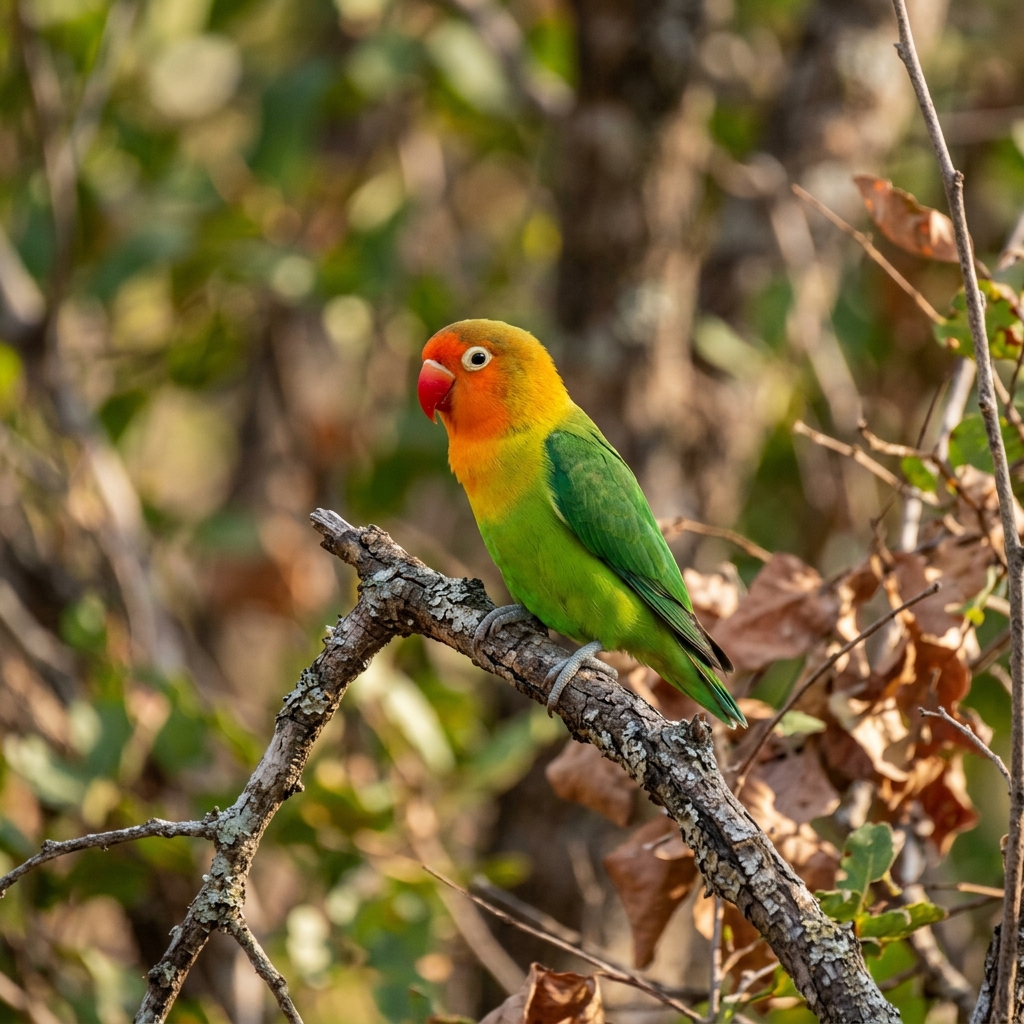
Endemic to a small range in southern Africa — large, noisy flocks gather around the Shire River in Liwonde NP, often roosting in palm trees along the banks.
Africa's largest crane — small numbers persist in Malawi's remaining marshes and grasslands; the Elephant Marsh in the Shire Valley is the most reliable location.
Its wild, yelping call is the iconic sound of African waterways — Lake Malawi's 580 km shoreline supports one of Africa's densest populations of this spectacular eagle.
Family groups of 5–10 walk slowly across Malawi's open woodland, probing for snakes, lizards, and large insects — the deep booming call carries up to 3 km.
An African bee-eater restricted to miombo woodland and riverine trees in Malawi and neighboring countries — breeds colonially in sandy riverbanks in Liwonde NP.
A jewel-like forest birds endemic to Afromontane areas — the Nyika Plateau's montane forest patches are reliable for this and several other uncommon Afromontane species.
A Zambia-Malawi border endemic restricted to Wild Fig woodland — has a pure white head with a yellow belly and red-brown wing patch, feeding in fruiting figs.
An intra-African migrant swift restricted to miombo woodland — one of the few birds so habitat-specific that the presence of miombo trees is a near-guaranteed predictor of its occurrence.
Ready to Bird Malawi?
Use our smart trip planner to get a custom itinerary — best hotspots, species targets, and seasonal timing tailored to your visit.