A near-endemic with a bill that looks assembled from spare parts — the yellow, black, and crimson bill is tipped with a strange bony casque plate unique among toucans.
Described only in 1997 — this rotund, elusive antpitta was the last large bird of the 20th century to be formally described, found only at Tapichalaca Reserve.
Spectacular leks in the cloud forests west of Quito — the Mindo Valley offers reliable dawn lek visits where 10+ brilliant orange males display simultaneously.
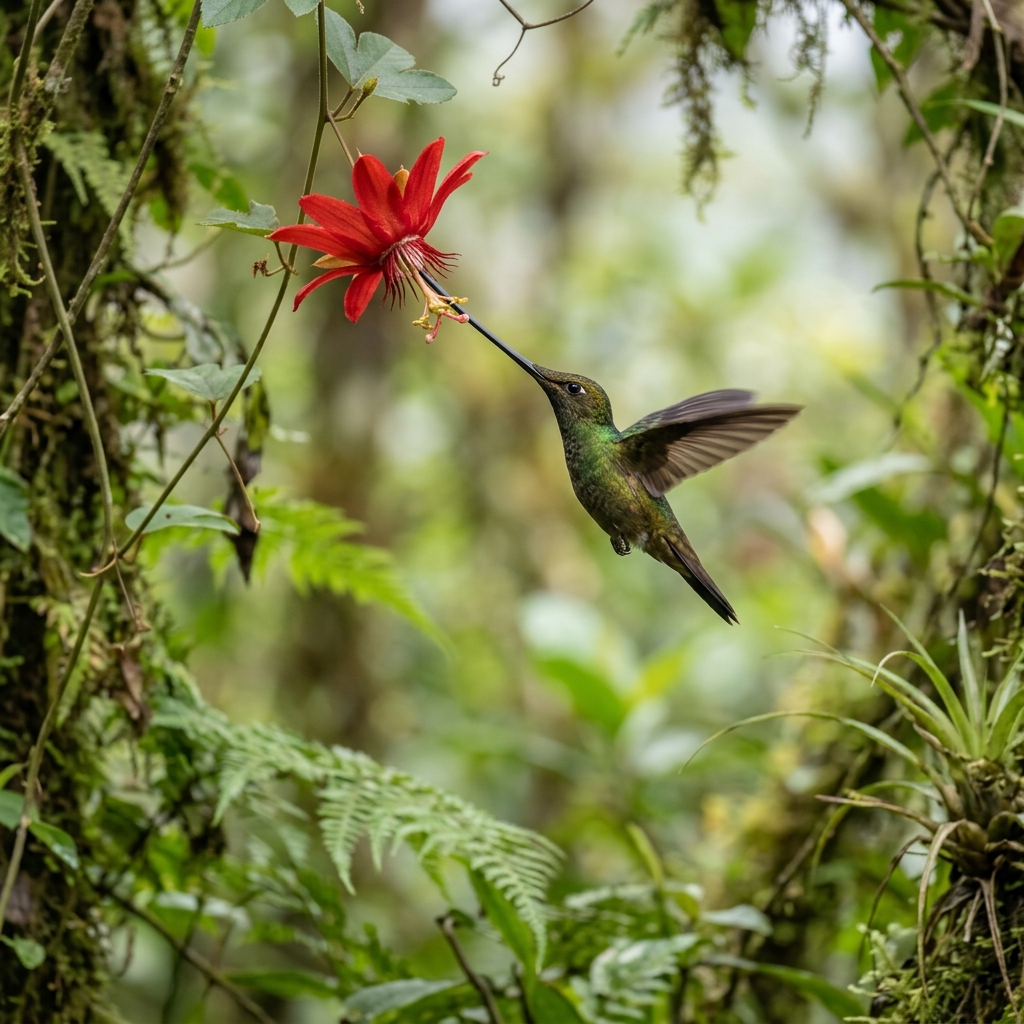
The male's 10 cm violet-blue tail streamers flutter like ribbons as it hovers at flowers — one of the most extravagant hummingbirds in a country known for hummingbird diversity.
Breeds exclusively on Española Island in the Galápagos — the world's most tropical albatross, performing an elaborate bill-clattering courtship dance.
Its name comes from the Spanish "bobo" (clown) — pairs perform a high-stepping dance displaying the brilliant turquoise feet that signal health and genetic fitness.
Angel Paz's famed antpitta-feeding program at Paz de las Aves has made the football-sized Giant Antpitta accessible to birders for the first time in history.
The male's outer tail feathers extend to 60 cm — three times the body length — and trail behind like streamers as it performs display flights above Andean valleys.
Ready to Bird Ecuador?
Use our smart trip planner to get a custom itinerary — best hotspots, species targets, and seasonal timing tailored to your visit.