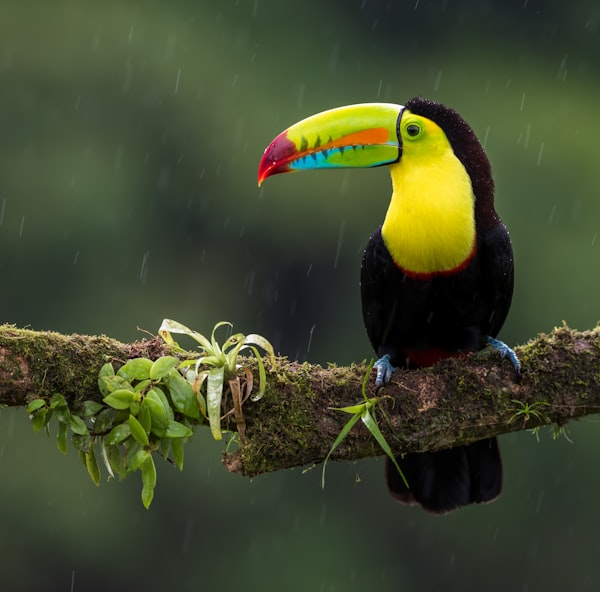
Mastering Bird Identification: A Comprehensive Guide
Ever seen a flash of brilliant blue at the edge of your vision or heard a complex, melodic song drifting from the treetops and felt a burning desire to put a name to its source? That moment of curiosity is the spark that ignites a lifelong passion for birdwatching. But turning that fleeting glimpse into a confident identification can be challenging.
You're not just looking at a "little brown bird." You're observing a unique species with its own story, behaviors, and place in the ecosystem. This guide is your roadmap to unlocking those stories. We'll move beyond simple color-matching and dive into the art and science of bird identification, equipping you with the skills and tools to confidently name the birds you see and hear.
The Four Pillars of Bird ID: Beyond Just Color
The biggest mistake new birders make is relying solely on color. While important, color can be misleading due to lighting, distance, and plumage variations. True mastery comes from observing four key elements together. Think of it as building a complete profile for your mystery bird.
H3: Size and Shape: The Bird's Silhouette
Before you even raise your binoculars, take in the bird's general impression of size and shape (often called "GISS" by birders).
- Size: Is it smaller than a sparrow? About the size of a robin? As large as a crow? Comparing it to a familiar bird is a fantastic starting point.
- Overall Shape: Is it plump and round like a dove or sleek and streamlined like a swallow?
- Specifics: Pay attention to the details that create the silhouette.
- Beak: Is it short and conical (for seed-cracking, like a finch), thin and pointed (for insects, like a warbler), or hooked (for tearing meat, like a hawk)?
- Tail: Is it long and pointed, short and stubby, or forked?
- Legs: Are they long and spindly like a heron's or short and stout?
H3: Color Pattern: The Field Marks That Matter
Now we can talk about color, but let's be specific. Instead of just "yellow," ask where the yellow is. These specific patches of color are called field marks.
- Head: Is there a cap, an eye-line, a "mustache" (malar stripe), or a ring around the eye?
- Wings: Look for wing bars (stripes across the wings) or patches of color that flash during flight.
- Body: Note the color of the breast, belly, back, and rump. A flash of color on the rump as a bird flies away is a classic clue for identifying flickers and other species.
- Tail: Are the outer tail feathers a different color? Is there a band across the tip?
H3: Behavior: What is the Bird Doing?
A bird's actions are a huge piece of the identification puzzle. Observing its behavior can often distinguish it from a nearly identical species.
- Foraging Style: Is it scratching in the leaf litter like a towhee, creeping up a tree trunk head-first like a nuthatch, or catching insects mid-air like a flycatcher?
- Flight Pattern: Is its flight direct and powerful like a starling's, bouncy and undulating like a goldfinch's, or does it involve soaring in circles like a vulture?
- Posture: Does it stand upright and alert like a robin or crouch horizontally like a wren?
H3: Habitat and Range: Where Are You?
You won't find a puffin in the desert or a cactus wren in the arctic. Context is everything.
- Habitat: Look around you. Are you in a dense forest, an open grassland, a marsh, or a suburban backyard? Certain birds strongly prefer specific environments.
- Range: Where are you geographically? A field guide's range map will show you where a species is expected to be found during different seasons (breeding, wintering, migration). If a bird is far outside its known range, you might have a rare vagrant on your hands!
Essential Gear for Accurate Identification
While your eyes and ears are your most important tools, the right equipment can dramatically enhance your abilities and bring the details into sharp focus.
-
Binoculars: This is the single most important piece of gear for any birder. A good pair of binoculars makes the difference between seeing a blurry shape and counting the feathers on a warbler's crown. For most birding, an 8x42 configuration is the sweet spot—8x magnification is stable enough to hand-hold, and the 42mm objective lens lets in plenty of light. The Vortex Optics Diamondback HD Binoculars 🛒 are a fantastic choice, offering incredible clarity and durability without breaking the bank.
-
Field Guide: Whether you prefer a physical book or a smartphone app, a reliable field guide is non-negotiable. Physical guides like The Sibley Guide to Birds are beautifully illustrated and allow you to compare multiple species at once. Apps like the Merlin Bird ID app from the Cornell Lab of Ornithology offer photo and sound ID assistance, which is incredibly helpful for beginners. We recommend having both! Grab a classic like the Sibley Guide to Birds, Second Edition 🛒 to build a strong foundation.
-
Spotting Scope: When birds are too far away for binoculars—like shorebirds on a distant mudflat or a hawk on a faraway perch—a spotting scope is a game-changer. It offers much higher magnification (typically 20-60x) and requires a tripod for stability. It's a bigger investment, but for serious birders, it opens up a whole new world of viewing. A great entry-point into the world of scopes is the Celestron Ultima 80 Spotting Scope 🛒.
Honing Your Senses: Identifying Birds by Sound
Often, you will hear a bird long before you see it. Learning to identify birds by their songs and calls—a practice known as "ear-birding"—will multiply your identification skills.
H3: Songs vs. Calls
First, it's helpful to know the difference:
- Songs are typically more complex and musical. They are used primarily by males to attract mates and defend territory.
- Calls are shorter, simpler vocalizations used for communication, such as warning of a predator, indicating location, or keeping a flock together.
H3: Learning to Listen
Actively listening is a skill. Go outside, close your eyes, and try to isolate one sound. Pay attention to:
- Rhythm and Cadence: Is the song fast and jumbled or slow and melodic?
- Pitch: Is it high and thin or low and rich?
- Repetition: Does the bird repeat a single note or a full phrase?
A great way to remember bird songs is to use mnemonics, or word associations. For example, the Eastern Towhee sounds like it's singing "Drink your teeeea!" and the Barred Owl famously asks, "Who cooks for you? Who cooks for you all?"
Advanced Techniques: Spotting Rare Variations
As you become more experienced, you'll encounter birds that don't quite match the pictures in your guide. This is where the real fun begins!
- Molt and Plumage: Birds change their feathers (molt) at least once a year. Their "non-breeding" or "basic" plumage can look drastically different from their flashy "breeding" or "alternate" plumage. This is why fall warblers are notoriously tricky to identify!
- Juvenile and Immature Birds: Young birds often look nothing like their parents. They may be drabber, spottier, or have different markings altogether. Learning these variations takes time and practice.
- Leucism and Albinism: Occasionally, you may see a bird with abnormal coloring. Albinism is a total lack of pigment, resulting in a white bird with pink eyes. More common is leucism, a partial loss of pigment that can result in a bird with white patches or a pale, washed-out appearance. In these cases, you must rely entirely on size, shape, and behavior for a correct ID.
Putting It All Together: Your Field ID Workflow
When you spot a new bird, resist the urge to immediately grab your field guide. Follow this simple process to gather the most information.
- Observe First, ID Later. Watch the bird for as long as you can. Pay close attention to its behavior and how it moves.
- Run Through the Four Pillars. Mentally (or in a notebook), note its Size/Shape, Color Pattern, Behavior, and Habitat.
- Listen for Clues. Are there any calls or songs you can associate with the bird?
- Consult Your Guide. Now, with a wealth of information, open your guide or app. Use your observations to narrow down the possibilities. Don't just look for a picture that matches; read the descriptions and check the range maps.
- Confirm and Celebrate! Once you've made a confident ID, take a moment to enjoy it. Log your sighting in a journal or an app like eBird to contribute to citizen science.
Bird identification is a journey of continuous learning. Every bird you see is a new puzzle and a new opportunity to sharpen your skills. Be patient with yourself, stay curious, and most importantly, have fun exploring the incredible diversity of avian life around you.
Happy birding
Find your perfect birding location next
Use our smart planner to discover the best spots matched to your experience level and the birds you want to see.