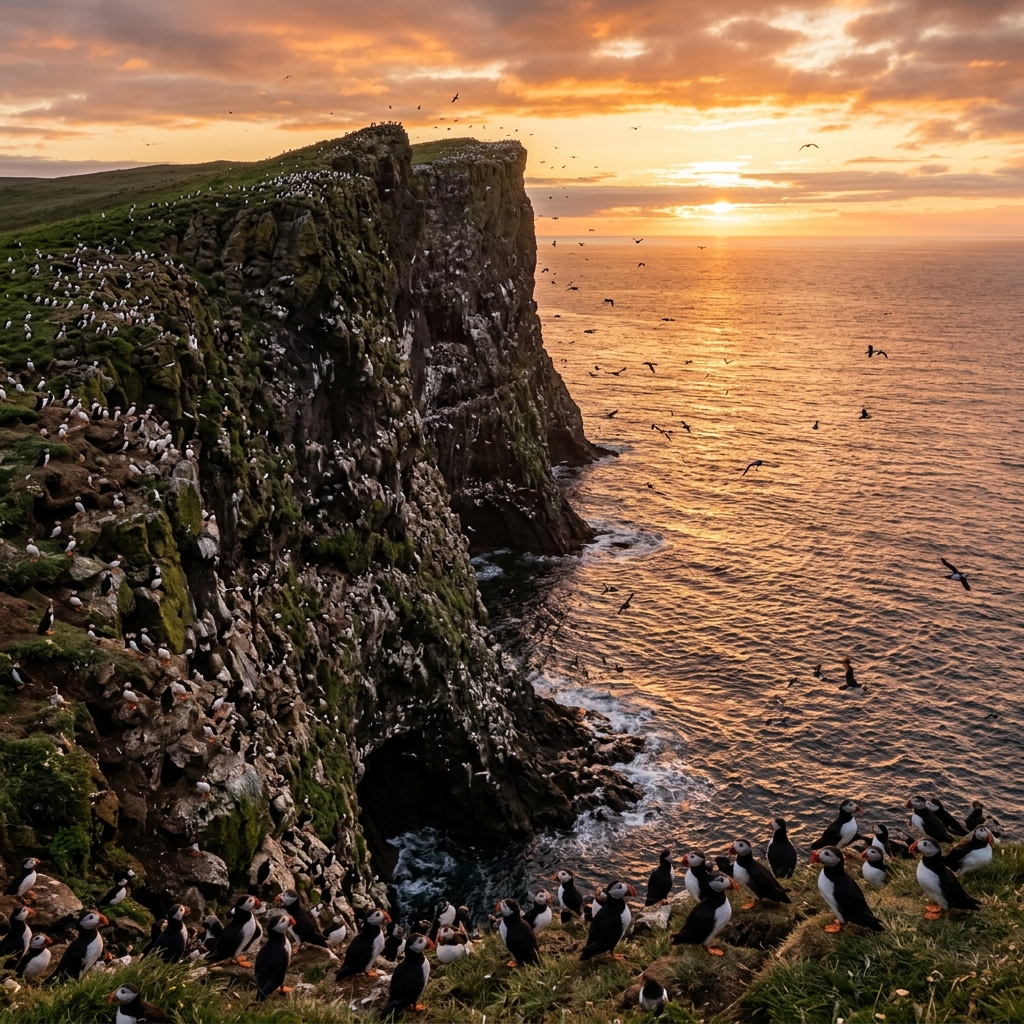
Iceland: The Puffin Capital of the World
Iceland is home to approximately 60% of the world's Atlantic Puffin population — an estimated 8-10 million individuals. From mid-April to mid-August, these charismatic seabirds return to their breeding colonies on sea cliffs and offshore islands across the country. No other destination offers such accessible, reliable, and spectacular puffin encounters.
Best Puffin Locations
Látrabjarg Cliffs (Westfjords)
- Why visit: Europe's westernmost point and one of Iceland's largest seabird cliffs (14 km long, 440m high)
- Puffin access: Walk right up to nesting puffins on the cliff top — they're remarkably tame at arm's length
- Other seabirds: Razorbills, Common Guillemots, Northern Fulmars by the thousands
- Getting there: 6-hour drive from Reykjavik (remote, but worth it)
- Tip: Visit in evening light (9-11 PM in June) for the best photography conditions
Borgarfjörður Eystri (East Iceland)
- Why visit: The most intimate puffin viewing in Iceland. A wooden viewing platform puts you within 1-2 meters of nesting birds.
- Colony size: ~10,000 pairs
- Access: Easy — drive right to the colony, walk 5 minutes
- Advantage: Less touristed than the south coast. Birds are exceptionally confiding.
- Best months: May to mid-August
Vestmannaeyjar (Westman Islands)
- Why visit: The largest puffin colony on Earth — 1.1 million pairs
- Access: 35-minute ferry from Landeyjarhöfn or 25-minute flight from Reykjavik
- Unique experience: In August, young pufflings emerge from burrows at night and become disoriented by town lights. Local children rescue them and release them at the coast — a beloved Icelandic tradition.
- Volcanoes: The island's dramatic volcanic landscape (Eldfell erupted in 1973) adds to the atmosphere
Dyrhólaey (South Coast)
- Why visit: Convenient if you're driving the Ring Road. Dramatic sea arch with puffins nesting on the cliffs above.
- Access: 20 minutes from Vik. Easy cliffside walk.
- Restrictions: Parts of the clifftop close during peak nesting (May-June) to protect breeding birds
- Other species: Arctic Terns (aggressive dive-bombers), Northern Fulmars
Lundey Island (near Húsavík)
- Why visit: Combine puffin viewing with whale watching from Húsavík
- Access: Boat tour from Húsavík harbor (often combined with whale watching)
- Season: June to mid-August
Timing
| Month | Puffin Activity |
|---|---|
| Mid-April | First arrivals; birds rafting on the water near colonies |
| May | Colony establishment; burrow cleaning; mating |
| June | Egg laying and early incubation; adults present at colony all day |
| July | Chick rearing; adults flying to sea and returning with fish (best photo opportunities) |
| August 1-15 | Pufflings fledge; colony activity winds down; adults depart |
| Late August | Most puffins have departed for the open ocean |
The sweet spot is late June to mid-July — chick-rearing adults make constant food deliveries, providing endless action and photo opportunities. Adults returning with beakfuls of sand eels are the iconic puffin image.
Photography Tips Specific to Iceland
- Lens: 70-200mm is often sufficient; at Borgarfjörður Eystri, even 24-70mm works for environmental portraits
- Golden hour lasts all night in June-July. The best light is often 9 PM – 1 AM
- Shoot in flight: Position yourself on the cliff edge (carefully) and shoot puffins flying into the colony against the ocean backdrop
- Rainy days: Iceland's weather changes rapidly. Bring a rain cover for your gear and waterproof jacket always
Practical Tips
- Book accommodation early — especially in Borgarfjörður Eystri and Vestmannaeyjar, which have limited options
- Rent a 4WD if visiting Látrabjarg — the road requires river crossings (in summer conditions only)
- Dress in layers — even in July, temperatures range from 5-15°C with wind chill
- Respect nesting areas — stay on marked paths, never reach into burrows, and keep quiet near colonies
- Budget: Iceland is expensive. Expect $200-$300/day for car rental, fuel, accommodation, and meals
Find your perfect birding location next
Use our smart planner to discover the best spots matched to your experience level and the birds you want to see.