Best Binoculars for Forest Birding 2025
HomeGearBudget (Under $300) vs Mid-Range ($300–$700) vs Premium ($900+)
🔭 Binoculars · Gear Guide

Best Binoculars for Forest Birding 2025

Dark canopy, fast birds, tangled branches. These binoculars win.

Best for forest
Zeiss Terra ED 8x42

Quick verdict: Forest birding rewards wide field of view, close-focus capability, and bright optics — all of which favour 8x42 binoculars with high-quality glass. Our top all-round recommendation is the Zeiss Terra ED 8x42 for its exceptional FOV and close focus at a mid-range price.

Head-to-Head Comparison

FeatureBudget (Under $300)Mid-Range ($300–$700)Premium ($900+)
Example ModelAthlon Midas UHD 8x42Zeiss Terra ED 8x42Zeiss Victory SF 8x42
Magnification
Field of View388 ft/1000 yds393 ft/1000 yds426 ft/1000 yds
Close Focus~6 ft~5.5 ft~4.9 ft
Glass QualityED glass, ESP coatingSCHOTT ED glass, T* coatingFL glass, T* coating
Low-Light BrightnessVery GoodExcellentExcellent
Weight~680g~620g~755g
Price~$350~$599~$2,699

Pros & Cons

Budget/Mid picks for forest
✓ Pros
  • +ED glass dramatically reduces colour fringing on backlit canopy birds
  • +Wide FOV keeps fast-moving warblers and tits in frame
  • +Close focus under 6 ft handles bark-creeping species and close-range views
✗ Cons
  • Edge sharpness and colour rendering fall behind premium glass in low canopy light
  • Slower focus wheels on some models
Premium picks for forest
✓ Pros
  • +FL glass produces stunning contrast in dark woodland conditions
  • +Fastest focus wheels in the industry — critical for fast-moving forest birds
  • +Widest fields of view in the binocular market
  • +Close focus under 5 ft opens up butterfly, dragonfly, and plant ID too
✗ Cons
  • Very high cost
  • Weight of SF models can be tiring over a full day in the field

Which Should You Choose?

The right choice depends heavily on where and how you bird. Here's our scenario-by-scenario guidance:

Spring warbler migration in dense woodland
8x42 with wide FOV
Warblers move fast through foliage — a wide FOV keeps you on the bird.
Winter thrush feeding flocks
8x42
Low January light demands a large exit pupil; 8× outdoors the 10× in these conditions.
Tropical forest birding (SE Asia, Costa Rica)
8x42 premium
Complex lighting, fast hummingbirds, and near-vertical canopy demand the absolute best optics.
Close-range woodland nuthatch / treecreeper watching
8x42 with ≤6ft close focus
Birds work very close to the bark — close focus capability is critical.

Our Top Picks

As an Amazon Associate we earn from qualifying purchases. This helps keep AvianScope free.

Top Pick
Zeiss Terra ED 8x42
~$599
View on Amazon →
Budget Pick
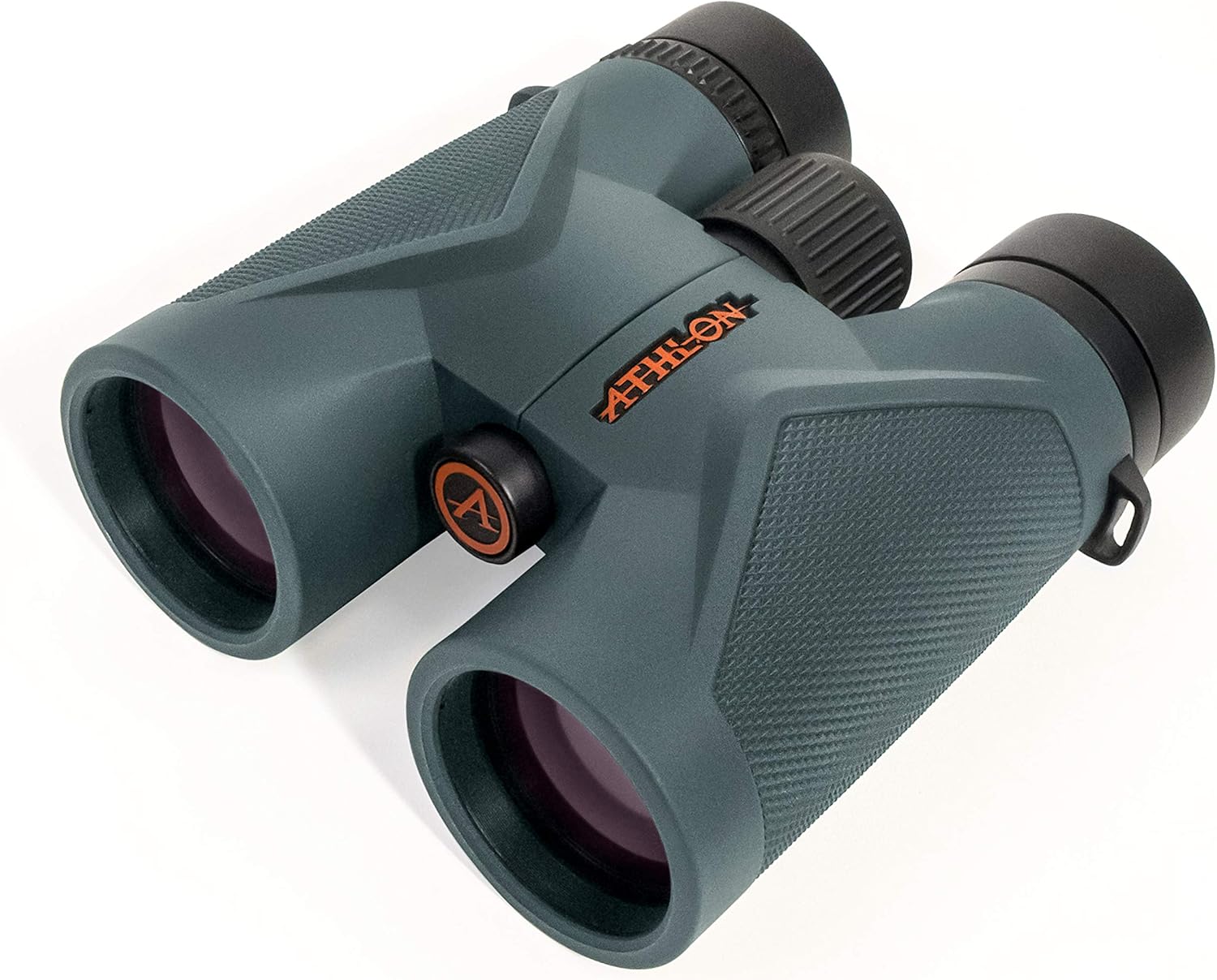
Athlon Midas UHD 8x42
~$350
View on Amazon →
Mid-Range
Vortex Viper HD 8x42
~$450
View on Amazon →

Frequently Asked Questions

Why is 8x better than 10x for forest birding?+
The wider field of view (typically 15–25% wider) is the primary reason. In dense woodland where birds are close and moving, finding the bird quickly matters more than extra magnification.
What close focus should I look for in forest binoculars?+
Under 6 feet is good; under 5 feet is excellent. Close focus is especially important for birders who also identify butterflies, dragonflies, and wildflowers.
Does glass quality matter more in forests?+
Yes — the dark conditions inside a wood (even on a bright day) push binoculars to their limits. ED or FL glass delivers dramatically better results than standard glass in low-contrast, low-light canopy situations.

Ready to Find Your Perfect Birding Spot?

Use our trip planner to match the right habitat to your new gear — hotspots, seasonal timing, and species targets all in one place.

Plan a Birding TripMore Gear Guides