Quick Navigation
The 6 Best Cameras for Bird Photography
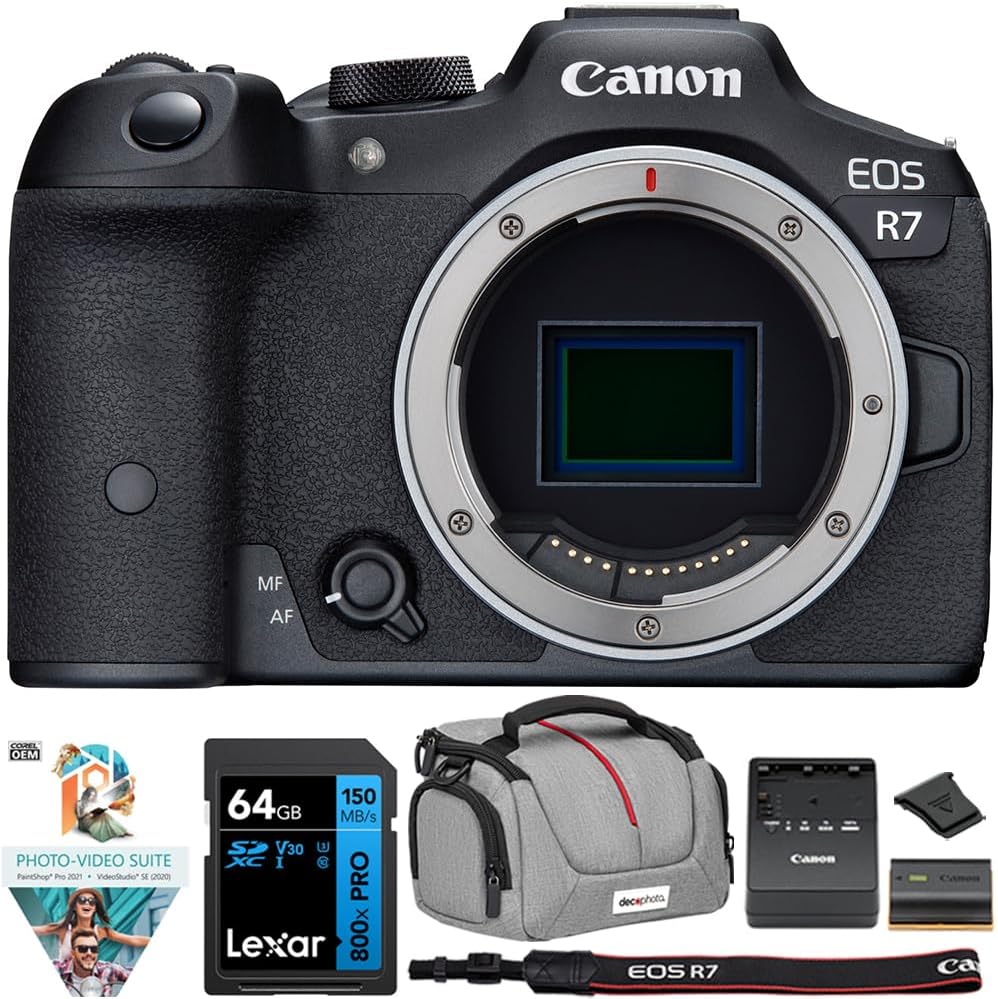
The R7 is the most practical answer to "what camera should I buy for bird photography" right now. Dual Pixel CMOS AF II with subject-detection AI tracks birds in flight with a reliability that DSLR systems could not match even two generations ago; the keeper rate jump from a phase-detect system on a comparable DSLR is significant and immediately obvious. The APS-C 1.6× crop is a genuine field advantage — a 400mm lens becomes equivalent to 640mm without the weight or cost of a longer lens. 30fps electronic burst captures wing positions that mechanical shutter misses, and at 32.5MP you have meaningful crop headroom in post. The main cost trap is the RF lens ecosystem: native RF lenses are expensive. If you already own Canon EF lenses, the EF-EOS R adapter maintains full AF performance and makes the R7 a logical upgrade path from any EOS DSLR body.
- +AI bird-detect AF delivers a keeper rate improvement over any DSLR at comparable price
- +1.6× APS-C crop extends the effective reach of every lens you own
- +30fps electronic burst — captures wing positions that 8–10fps mechanical systems routinely miss
- +In-body stabilization works with adapted EF lenses — useful for longer glass handheld
- −Native RF telephoto lenses are expensive — R7 body + RF 100-500mm is a $4,500+ system
- −660 shots per charge is short; carry at minimum two batteries on a full day's birding
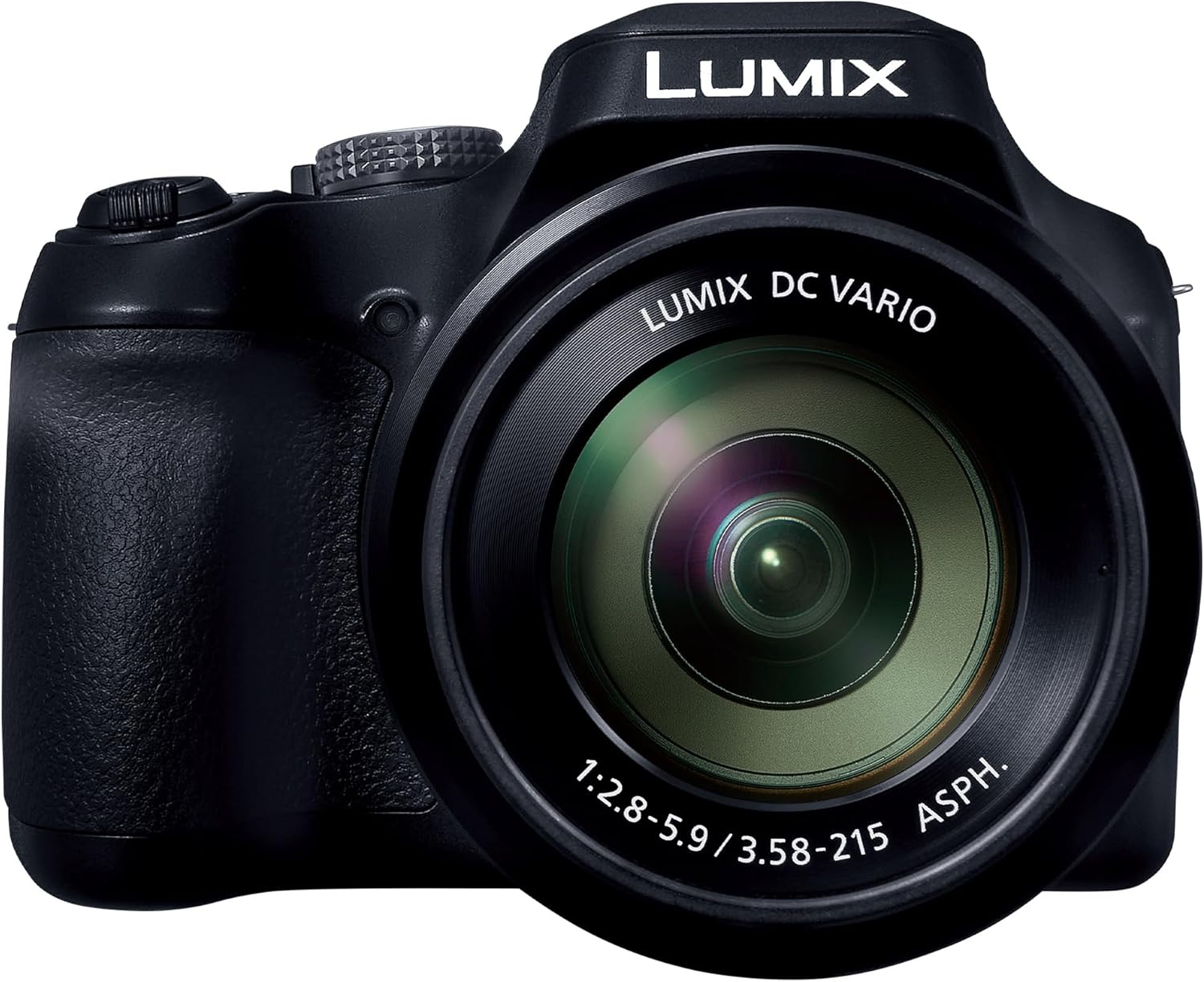
The FZ300 answers the question that most beginner bird photographers actually have: "Do I need to spend $1,500 on a camera body and then another $1,500 on a lens?" The answer, for most people starting out, is no. A 600mm-equivalent built-in zoom means you arrive at a birding location with everything you need, in one piece, for under $530. The small sensor limits high-ISO performance — shots above ISO 800 get noticeably noisy, which constrains use in dark forest or low-light dawn conditions. AF tracking is contrast-detect, not phase-detect: slower and less reliable on fast-moving birds in flight than any mirrorless body in the interchangeable-lens class. For songbirds at feeders, waterfowl on open water, and herons in good light, it works well. For sharp flight shots of terns and swallows on a moving boat, it will frustrate you.
- +All-in-one system under $530 — no separate lens purchase; arrive and shoot immediately
- +600mm-equivalent reach — enough for most waterfowl, raptor, and large bird work
- +Weather-sealed body survives light rain, which is not a guarantee in this price range
- +4K video at a price where most competitors offer 1080p — useful for behavioral documentation
- −Small 1/2.3" sensor — significant noise above ISO 800; limited use in dark conditions
- −Contrast-detect AF struggles with fast birds in flight — keeper rate on action shots is low
- −Essentially no upgrade path — when you outgrow it, you start over with new glass
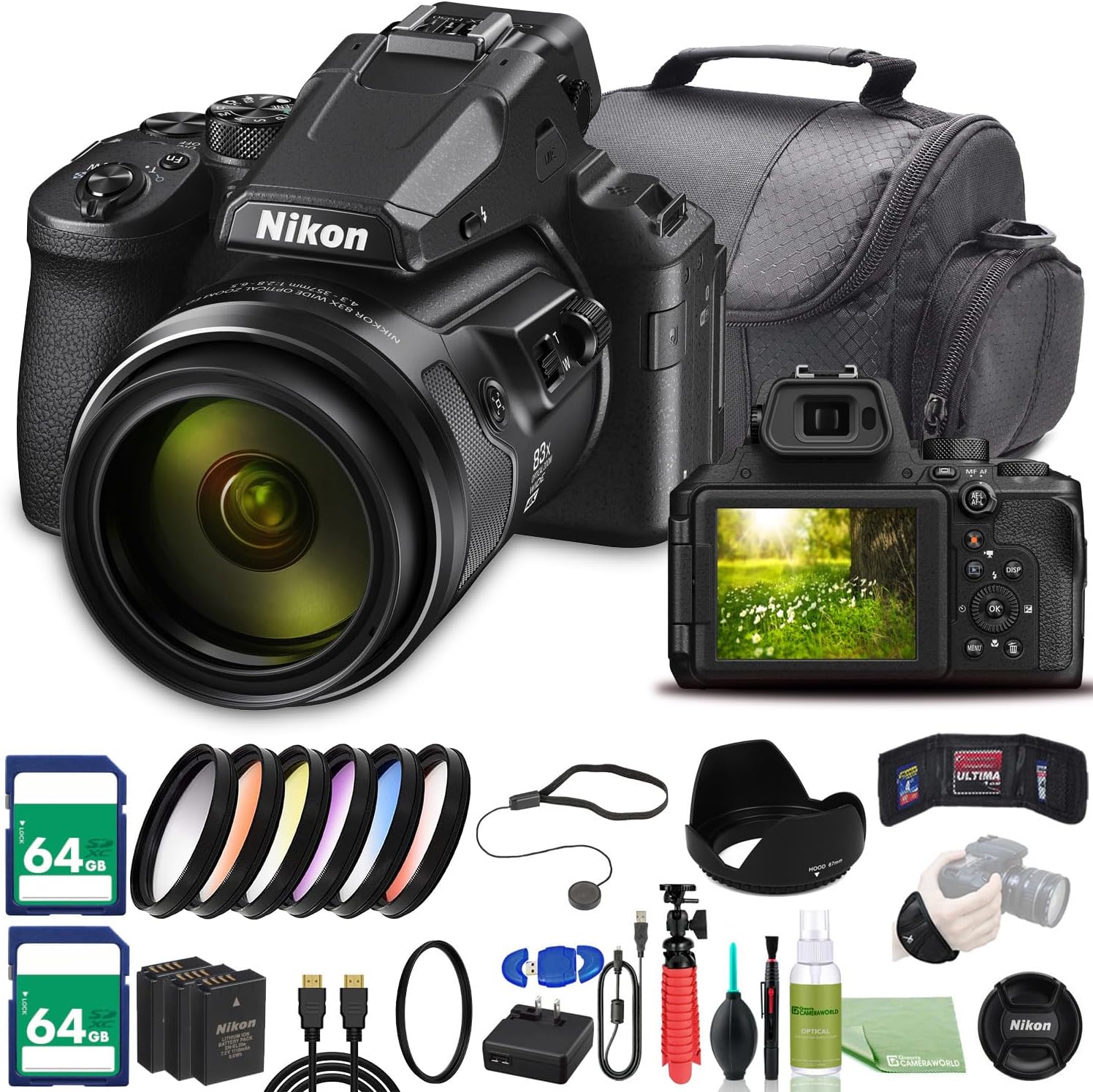
The P950's headline is the 2000mm equivalent zoom — a specification that sounds absurd until you're watching a Bald Eagle thermal half a mile overhead and want to actually see it. At that focal length, atmospheric heat shimmer becomes the primary limiting factor, not the camera. In practical field conditions you'll use 400–800mm for most bird photography; the ability to push to 2000mm occasionally for distant raptors or shorebirds on a flat calm day is genuinely useful. The 16MP sensor is a modest improvement over the FZ300's 12MP. Dual Detect VR (optical + sensor stabilization) at 2000mm is technically impressive, though results are still highly dependent on steady technique. Not weather-sealed — a notable weakness given the FZ300 is, for $200 less.
- +83x zoom to 2000mm equivalent — handles subjects at distances where most equipment cannot
- +16MP sensor — marginally more resolution than FZ300 for cropping in post
- +RAW capture available — useful for post-processing latitude that the FZ300's JPEG-only mode lacks
- +Dual Detect VR — Nikon's best image stabilization in the bridge class
- −Not weather-sealed — a meaningful gap at this price compared to the FZ300
- −7 fps burst — slower than the FZ300 and significantly slower than mirrorless alternatives
- −Same small-sensor low-light limitations as all cameras in this class
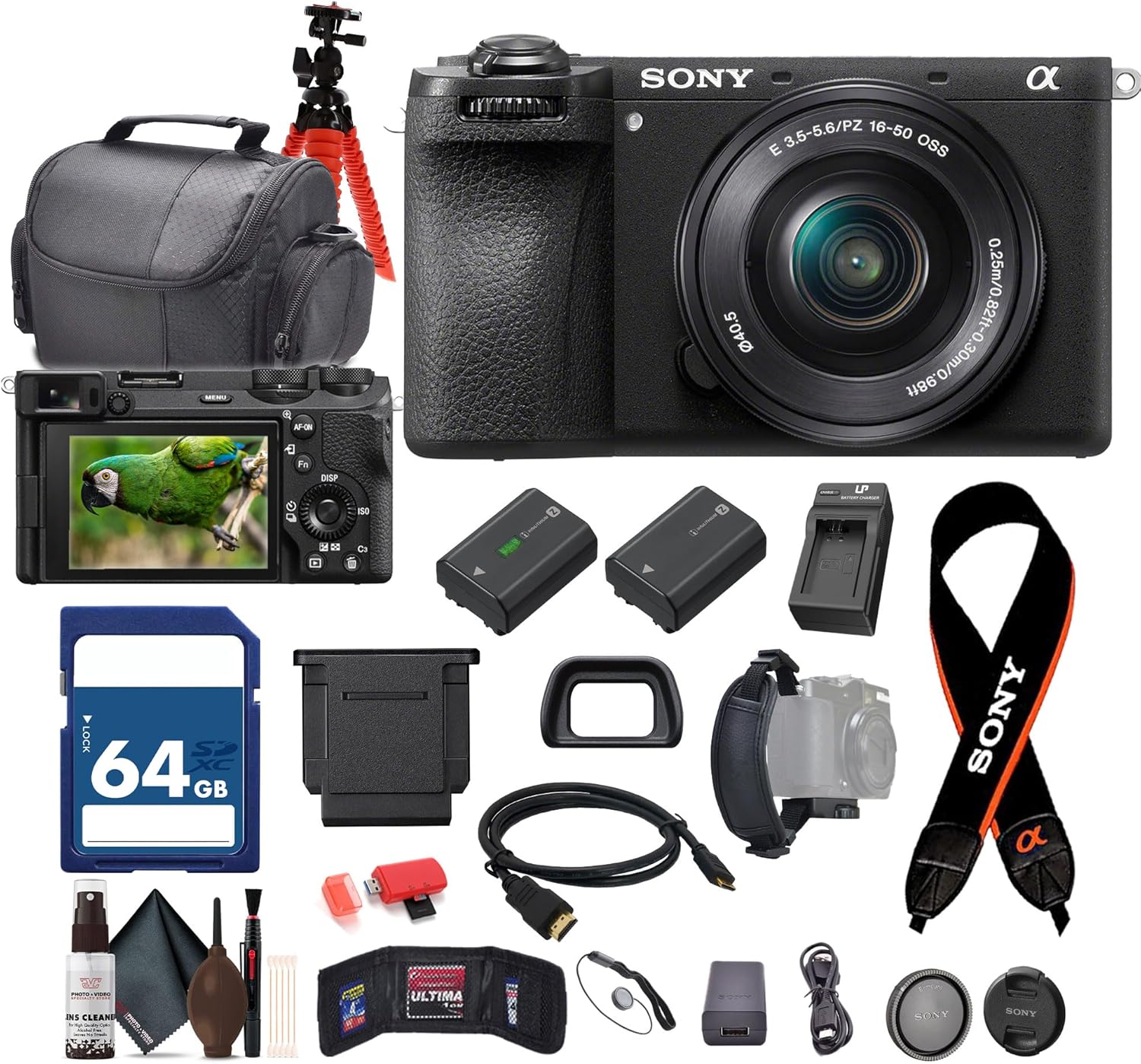
The A6700 is Sony's best APS-C mirrorless for wildlife — it brings the AI subject-detection system from the A9-series down to a $1,300 body. The 5-axis IBIS is more effective than the R7's for handheld telephoto work at slower shutter speeds. The limitation is the E-mount lens ecosystem for APS-C: Sony's native APS-C telephoto options are limited and expensive; most A6700 wildlife shooters use the FE 200-600mm G OSS on this body (1.5× crop makes it 300–900mm equivalent), which is an outstanding combination but pushes total system cost past $3,000. Sony's menus are genuinely complex — plan time to configure it before a trip. Battery life (570 shots per charge) is weaker than the R7's already modest 660.
- +AI phase-detect subject tracking from the A9 tier — bird-detect AI is the best Sony offers at APS-C
- +5-axis IBIS at 7 stops — more effective for telephoto handheld than the Canon R7's system
- +4K 120p video — the most capable APS-C video camera for slow-motion bird behavior documentation
- +1.5× APS-C crop multiplies effective lens reach without the full-frame cost
- −Limited native APS-C telephoto options — most users end up buying FE glass, inflating cost
- −Sony menu complexity remains a genuine learning investment — allocate time before field use
- −570 shots per charge — shorter than comparable Canon and Nikon bodies
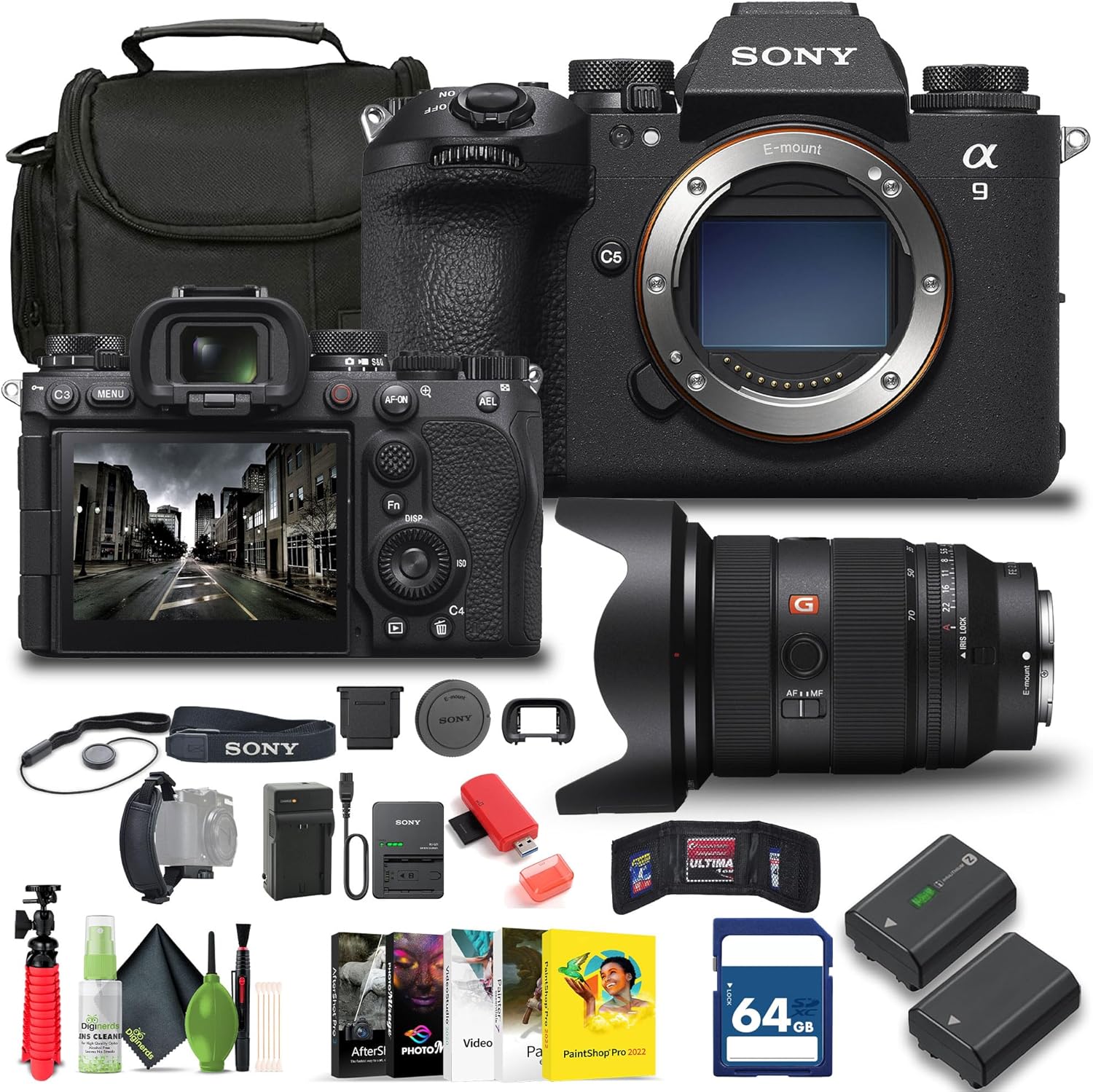
The A9 III's global shutter is a genuinely novel technology — the first full-frame camera to eliminate rolling shutter entirely. At 120 frames per second, every wing position in a hummingbird's wingbeat cycle is captured, and the image is perfectly frozen with no distortion. For most birders, this is overkill measured in thousand-dollar increments: the Canon R7 at $1,499 delivers 80% of the A9 III's real-world keeper rate at a fraction of the system cost. The A9 III earns its price for working wildlife and conservation photographers where publication-quality shots of fast species in difficult light are the job, not the hobby. If you are at that level and billing clients for the work, the math makes sense. If you are not, the R7 will not be the reason you miss shots.
- +Global shutter — no rolling shutter at any burst speed; a genuine technical breakthrough
- +120fps electronic burst captures every frame of fast-wing behavior without compromise
- +Best full-frame AI subject detection currently available for wildlife
- +800 shots per charge — best battery life on this page by a significant margin
- −~$6,000 body — total wildlife system cost typically $12,000+ with appropriate telephoto glass
- −No meaningful difference in keeper rate from the Canon R7 for most North American passerine and raptor photography in adequate light
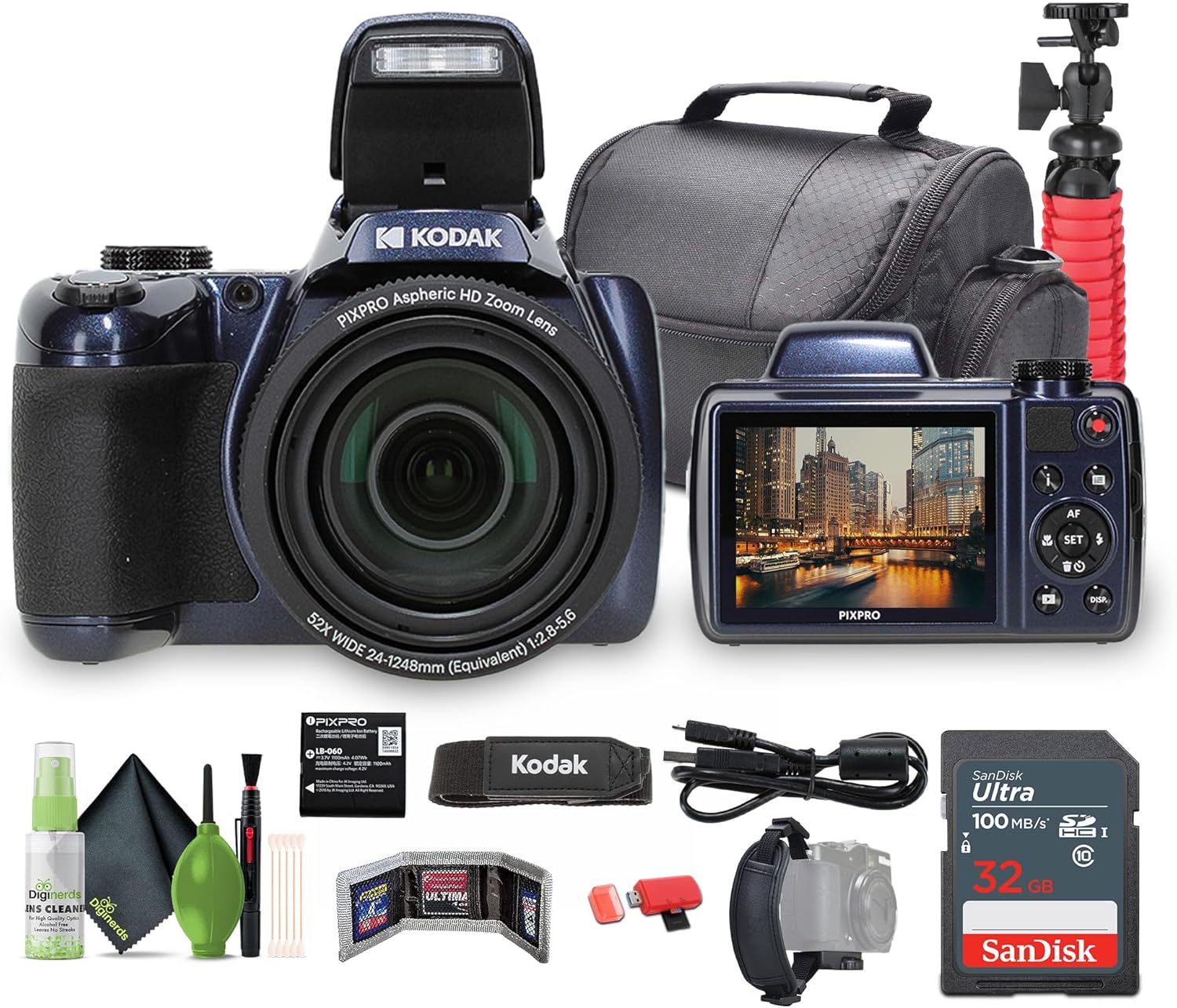
The Kodak AZ528 is the entry point for bird photography — under $300 gets you a 52x optical zoom reaching 1248mm equivalent, which is more reach than some $2,000 interchangeable-lens setups. The trade-offs are real: the small 1/2.3" sensor produces visible noise above ISO 400, autofocus is slow contrast-detect only, and while the 6fps burst sounds decent on paper, the sluggish AF means your keeper rate on birds in flight will be low. But for perched songbirds, waterfowl on ponds, and backyard feeder photography in good daylight, it delivers images that are genuinely usable — especially for social media and personal documentation. If you're testing whether bird photography is for you before investing in a serious system, this is the camera that answers that question for $300 instead of $3,000. Read our full, in-depth review of the Kodak AZ528 here.
- +Under $300 — the lowest entry cost for a camera with serious telephoto reach
- +52x zoom to 1248mm equivalent — more reach than many $1,500+ systems
- +Compact and lightweight — fits in a daypack without a dedicated camera bag
- +Built-in Wi-Fi for quick sharing from the field
- −Small sensor — significant noise above ISO 400; strictly a good-light camera
- −No electronic viewfinder — LCD only, hard to see in bright sunlight
- −Contrast-detect AF is sluggish — expect a low keeper rate on moving subjects
- −No RAW capture — JPEG only limits post-processing flexibility
Frequently Asked Questions
Camera ready. Now find what to shoot.
Our trip planner surfaces the best locations for the species on your target list — by region, season, and habitat type.
💬 Discussion
Loading comments...
Enter your name and email to join the discussion